
How Supercity Chem-Dry tracks around 800 items across restoration jobs
Client: Supercity Chem-Dry
Industry: Flood Damage Restoration
Assets tracked: Approximately 800 items
Challenge: Keeping track of equipment across customer sites and locating missing items through manual checks and follow-up with technicians.
Solution: OnSight's Bluetooth Low Energy (BLE) equipment tags, warehouse gateway and mobile gateway app, providing recorded locations and last-seen reports.
Supercity Chem-Dry uses OnSight to track approximately 800 items across its warehouse and customer jobs. The aim is straightforward: give the team a record of where equipment was last detected, and a practical place to start when something cannot be found.
The challenge: finding equipment through manual follow-up
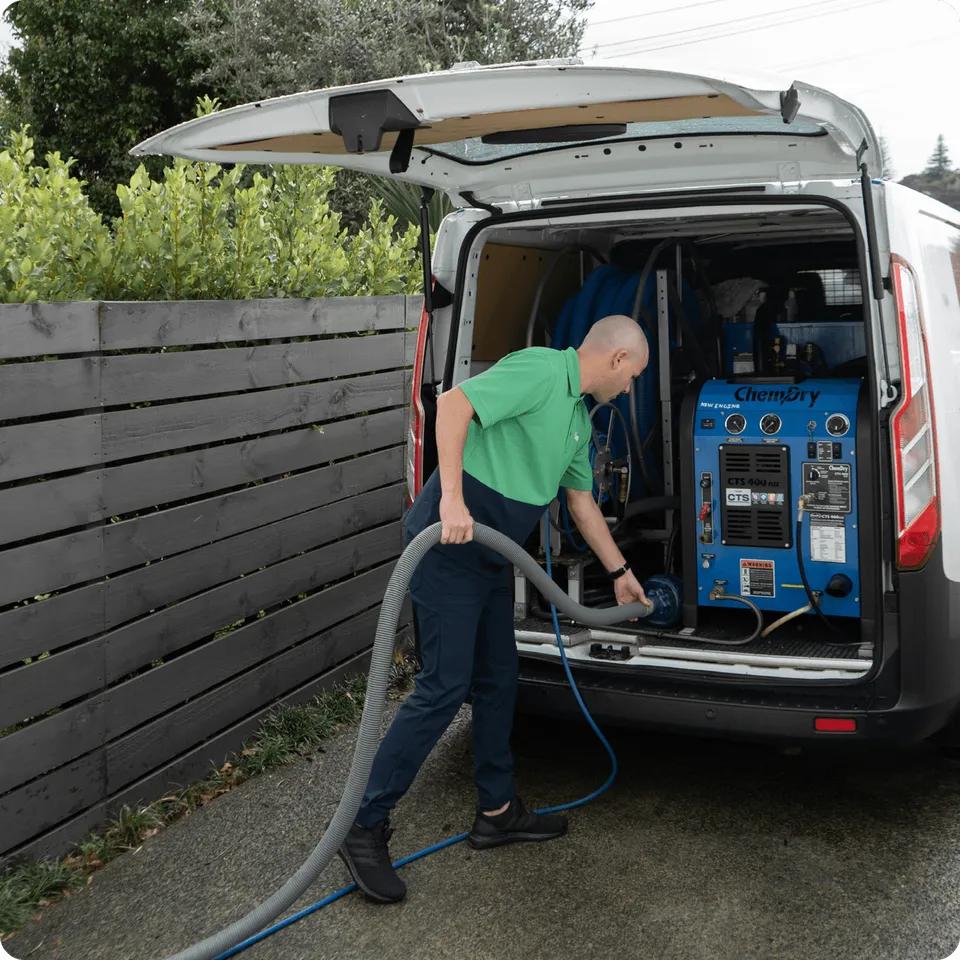
Flood-restoration equipment moves between the warehouse and customer sites, where it may remain while a property dries. When an item cannot be found, locating it can mean asking technicians where they last saw it and checking the jobs it may have been used on.
That manual follow-up needs a starting point. OnSight adds recorded detection history, giving the team information to check alongside what technicians can tell them.
The solution: equipment tags, warehouse detection and technicians' phones
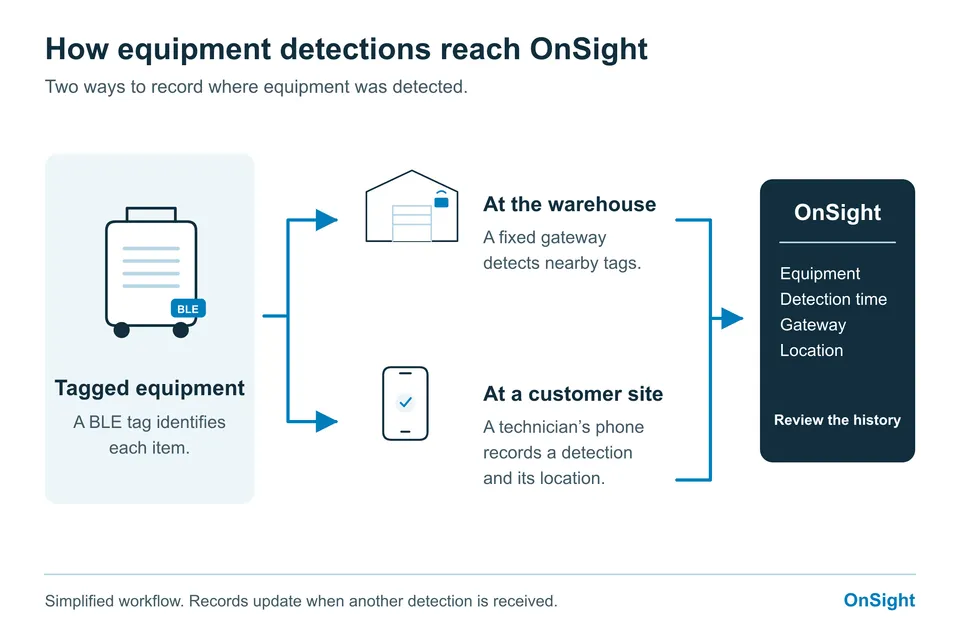
Bluetooth Low Energy (BLE) tags identify individual items. A fixed gateway detects tagged equipment in the warehouse, while technicians' phones act as mobile gateways when running the OnSight gateway app.
When a phone detects a nearby tag, OnSight records that detection with the phone's location at that time. The OnSight dashboard brings these records together so the team can look up equipment and review its detection history.
The outcome: a starting point for finding missing gear
OnSight gives the team information they can act on: when an item was last detected, where that detection was recorded, and which gateway recorded it.
Last-seen reports help the team focus checks on equipment that has not been detected recently. They can investigate the items that need attention and use the recorded location to guide their next check.
Feedback on a reporting and export update described this practical benefit:
“Really helps us focus on gear that hasn’t been seen for a few days so we can check it out.”
— Supercity Chem-Dry, September 2024
Detection records also provide a separate source of information to compare with job records when checking equipment deployed to customer sites.
The value is not replacing the team's knowledge. It is giving them a recorded starting point for conversations and checks when gear cannot be found.
Making equipment checks easier
The map and reporting workflow has been refined around the team's feedback. One map update added last-scanned dates for individual items and search for larger lists. In response to that improvement, Supercity Chem-Dry wrote:
“That’s the best update yet. Really like that one and I’m finding it very useful and timesaving.”
— Supercity Chem-Dry, December 2024
What "last seen" means
This deployment records detections; it does not provide continuous GPS tracking of every item. When a technician leaves a site, an item's last recorded detection remains on file until a new detection is received.
A phone detecting an item does not, by itself, prove who was responsible for it. Likewise, an item not being detected recently is a reason to check—not proof that it has been lost. A last-seen record provides a lead to follow up, not a guarantee of recovery.
Fitting tracking into everyday work
Tags were fitted in protected positions during the equipment's test-and-tag process. The mobile workflow was refined so that each location record relates to the moment the equipment was detected, rather than following a vehicle after it leaves.
For a deployment like this, tag placement, correctly configured gateway phones and a clear routine for reviewing missing-equipment reports all matter. The technology provides the records; the team uses them to decide what to check next.
Equipment spread across customer sites?
OnSight can help you explore an equipment-tracking setup built around your warehouse, customer sites and the way your technicians work.